
A playground can have excellent equipment and still become unusable when the sun heats the site, surfacing, and play components. That’s why understanding why including shade in playground design matters before the first equipment layout is finalized. Shade is more than a visual upgrade. It’s a planning tool that supports heat management, caregiver comfort, inclusive use, and better control over the project’s long-term costs. Visually, it helps make a destination of the features in the recreation space.
Shade makes outdoor play more usable
Children are more vulnerable to heat than adults, and active play adds physical exertion. Current guidance from public health and education professionals recommends shaded areas, water breaks, and avoiding the hottest part of the day when conditions are extreme.
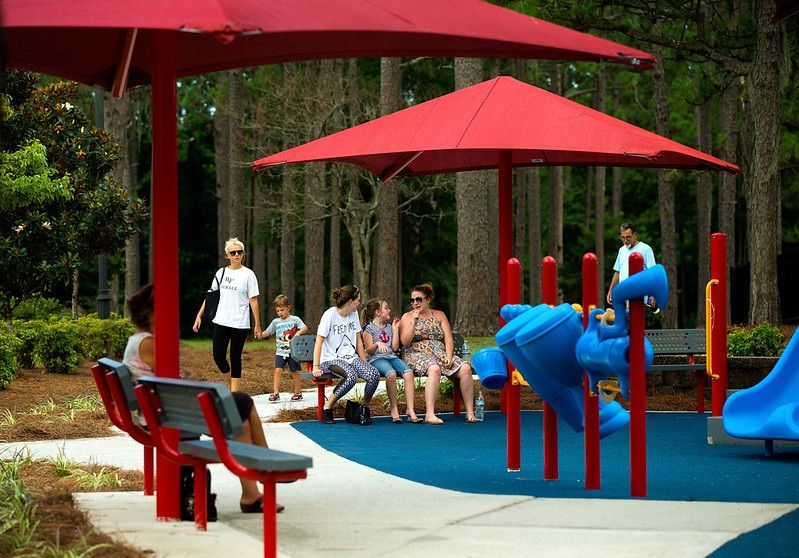 Fabric shade over playground sitting area
Playground shade for heat safety
Shade gives children and caregivers a place to pause, hydrate, and cool down without leaving the play area entirely. It can also help reduce direct solar exposure on slides, platforms, seating, and surfacing.
Shade doesn’t replace supervision, hydration, weather monitoring, or compliant equipment and surfacing. Instead, it works with those strategies to create a more comfortable and resilient recreation space.
The benefits of shade structures on playgrounds
The most obvious benefit is comfort, but shade can support the entire user experience.
- More consistent use: Families may be more likely to visit when the site includes places to play, rest, and gather out of direct sun.
- Better caregiver experience: Parents, grandparents, and staff need comfortable observation areas, especially when visits last longer than a few minutes.
- Protection for high-use areas: Shade can be positioned over seating, gathering areas, accessible routes, or portions of the play zone that receive intense afternoon sun.
- Stronger inclusive design: A shaded rest area can support children and caregivers who need breaks from heat, glare, or physical exertion.
- More design flexibility: Shade can help a site serve different activities at different times of day, from active play to socializing and quiet sensory experiences.
The National Recreation and Park Association’s July 2026 Park Pulse findings also identify shade and seating among the park features the public wants most. That reinforces an important point: shade serves adults as well as children.
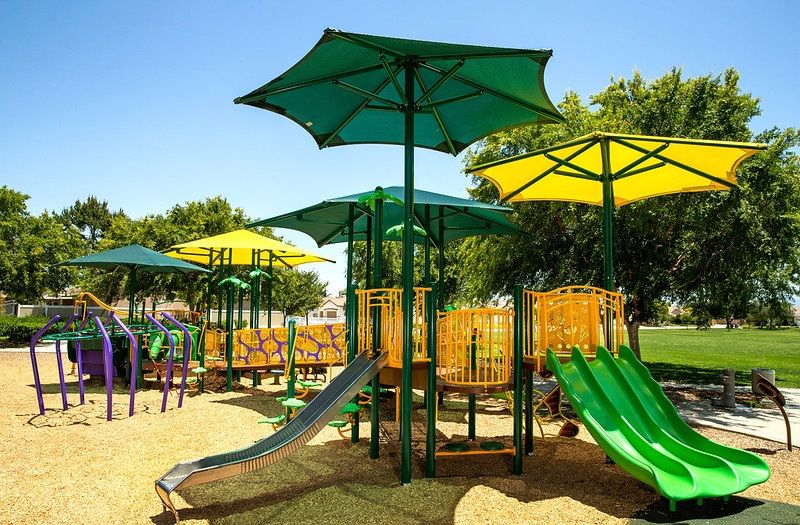 Fabric shade over playground equipment
How to budget for playground shade
The best time to budget for shade is during early concept development. Adding it after the play system, surfacing, drainage, and pathways are already designed can create conflicts and additional site work. Start by treating shade as part of the project—not as an optional accessory. Ask your design team to show at least two approaches, such as:
1. Shade integrated into the play structure. 2. Freestanding shade over seating or gathering areas. 3. A combination of structures and strategically placed trees. 4. A phased plan that adds additional coverage later.
Your budget should account for more than the canopy itself. Include structural supports, foundations, permits, engineering, installation, delivery, site access, drainage adjustments, and possible relocation of equipment or utilities.
Also consider maintenance, inspection, fabric replacement, tree care, and the effect of shade on surrounding surfacing. These details can affect both the initial project plan and long-term ownership costs.
A practical early estimate can begin with the overall project capacity and complexity, then reserve a defined portion for shade and site amenities. GameTime’s current budgeting guidance notes that large destination playgrounds with shade and custom features can exceed $100,000, while smaller projects can create meaningful play value through careful equipment selection and phasing.
The exact amount depends on the site and specifications, so use early budgeting to compare options rather than promise a fixed price.
Choose coverage based on use
Full coverage over every play component isn’t always necessary. Instead, study how the site will be used during the morning, midday, and afternoon. Prioritize areas where children and caregivers spend time, where equipment receives intense solar exposure, and where a nearby cooling or rest point would improve the layout. Keep sightlines open so caregivers and staff can still observe children clearly.
Structural supports must also be coordinated with accessible routes, use zones, clearances, drainage, and local requirements.
Trees and structures can work together
Trees can provide valuable shade and help cool the surrounding environment through evapotranspiration. They can also contribute to a more natural, welcoming setting. However, trees require planning for root growth, irrigation, leaf litter, pruning, storm conditions, and visibility. Engineered shade offers more predictable placement and coverage, protecting specific activity zones without waiting years for a canopy to mature.
A combined approach often gives communities the best balance: structures provide immediate coverage, while trees contribute long-term site character and environmental value.
Recent schoolyard heat observations from UC Davis found very limited average tree canopy at California schools and recorded heat-index conditions reaching 120°F in some outdoor areas. The findings illustrate why shade planning should respond to the actual microclimate of the site rather than rely on assumptions about regional weather.
Plan shade before the playground is priced
When shade is included from the beginning, communities can make better decisions about coverage, placement, phasing, maintenance, and total project value. The result is a playground that supports active play while giving children and caregivers a place to pause when conditions are demanding. Connect with us to see whats possible for your recreation space
Playground Safety in Warm Weather, Washington State Department of Health
NRPA Park Pulse Surveys, Park features that the public wants
Children's Outdoor Play: Staying Safe in Extreme Heat
