
When people hear “playground safety surfacing,” they usually picture the area underneath swings, slides and climbing equipment. And while protecting children from falls is one of the most important jobs playground surfacing does, today’s surfacing options can do much more. The right surface can create a safer, more accessible, durable and attractive outdoor space—and it doesn't have to stop at the edge of the playground.
At DWA Recreation, we help schools, parks and recreation departments, churches, community developers and other organizations choose playground and recreation surfacing that fits the way their outdoor spaces are actually used. From poured-in-place rubber and loose-fill materials to synthetic turf and bonded rubber, there are options for a wide range of applications, budgets and design goals.
What Is Playground Safety Surfacing?
Playground safety surfacing is designed to help reduce the severity of injuries from falls from playground equipment. The appropriate surface and depth depend on the equipment, fall height, site conditions and other project requirements. But safety is only part of the equation.
Today's recreational surfacing can also provide accessible routes, define activity areas, create comfortable gathering spaces and add visual interest to an outdoor environment. For high-use spaces, selecting the right surface can make a significant difference in how often a space can be used and how well it holds up over time.
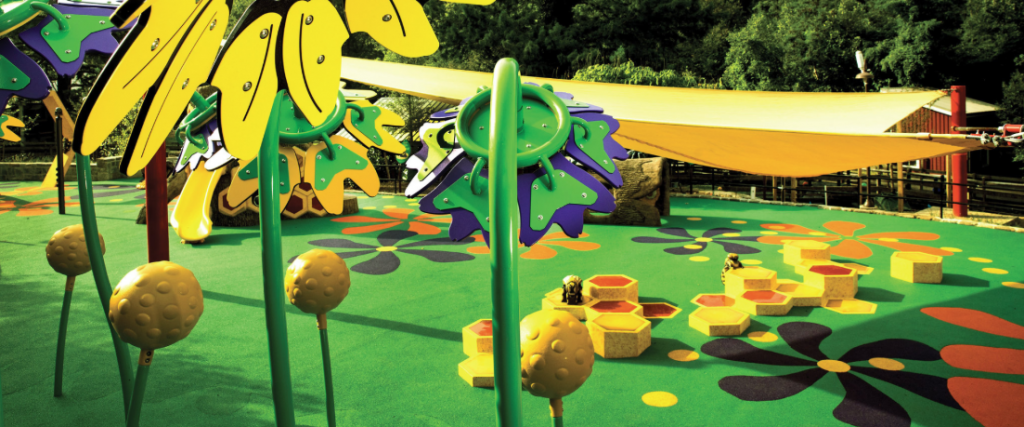 Poured-in-place rubber provides a durable, seamless safety surface ideal for high-use playgrounds, schools, parks and community recreation areas.
Poured-In-Place Rubber: A Popular Choice for High-Use Areas
Poured-In-Place Rubber is one of the most versatile playground surfacing options available.
This two-layer system combines a rubber wear course with a custom attenuation layer designed to meet fall-height requirements. It provides good shock absorption, is easy to clean and, unlike loose-fill materials, stays in place during everyday use and weather events. It can also incorporate colors, graphics and custom designs. That makes poured-in-place rubber particularly useful for high-traffic spaces where durability, accessibility and appearance all matter.
Think beyond the playground:
- Apartment and HOA recreation areas
- School courtyards and outdoor learning spaces
- Areas surrounding outdoor fitness equipment
- Community gathering spaces
- Spaces near shaded seating or picnic areas
- Accessible pathways and transitions
- Playgrounds with custom themes, logos or graphics
For an area that sees a lot of foot traffic, poured-in-place rubber can create a finished, cohesive look while providing a durable surface designed for recreational use.
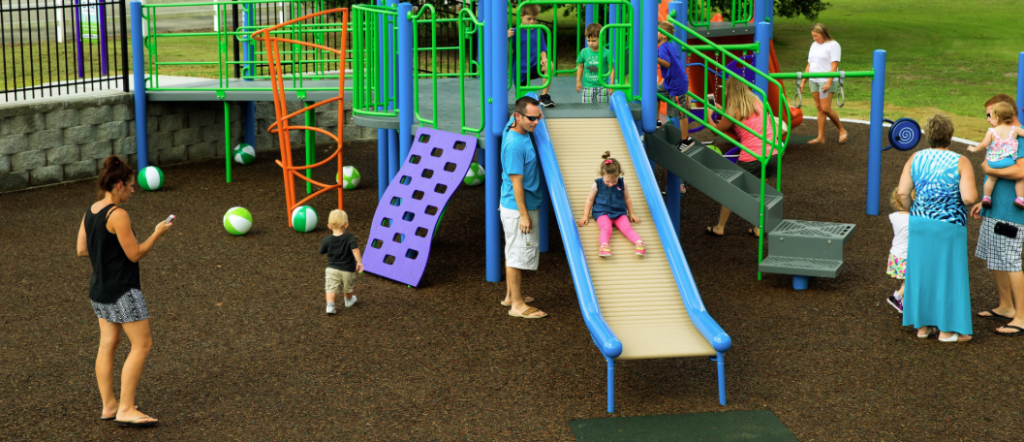 Bonded rubber creates a durable, resilient surface for playgrounds, walking paths and other high-use outdoor recreation areas.
Bonded Rubber: A Versatile Surface Beyond the Playground
Bonded Rubber is a single-layer system made from recycled materials and binder poured over a prepared sub-base. It provides a natural appearance, good shock absorption and a surface that is not easily displaced by everyday use or weather. GameTime also notes that bonded rubber can incorporate graphics and can be used for walking paths.
That versatility makes it worth considering for spaces such as:
- Walking paths
- Outdoor gathering areas
- Recreation spaces
- Transitional areas around playgrounds
- Community spaces
- High-use pedestrian areas
Bonded rubber is also made from 100% recycled material in the USA, adding another consideration for organizations looking at recycled-content surfacing options.
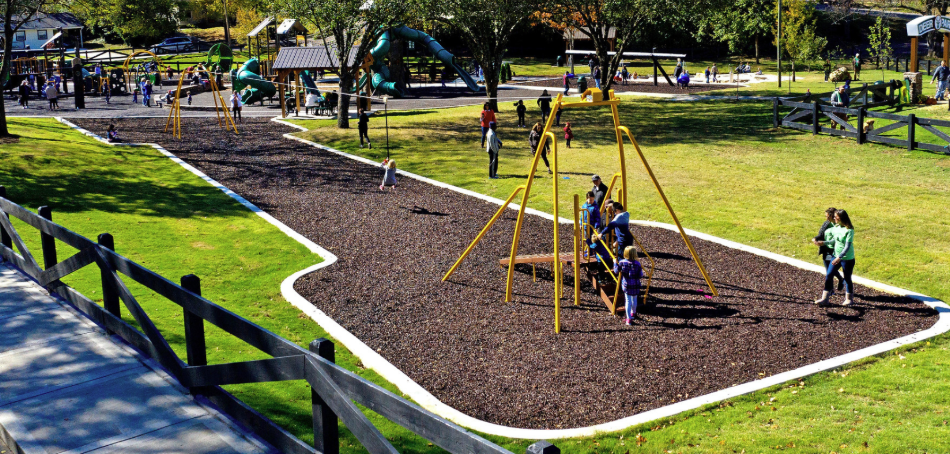 Recycled loose-fill rubber provides cushioned fall protection while offering a durable, low-maintenance option for active playground environments.
Loose-Fill Rubber: Cushioning With Recycled Materials
Recycled Loose-Fill Rubber is another option for areas where fall attenuation is important. Made from recycled tires in the USA, loose-fill rubber provides shock absorption and is resistant to mold, animals and insects. It can also provide more color options than some other loose-fill surfaces.
Because it is a loose-fill material, regular maintenance is important. It needs to be monitored and refilled as necessary to maintain the appropriate depth and performance. This can be a practical option for playgrounds and other recreational areas where cushioning and budget are important considerations.
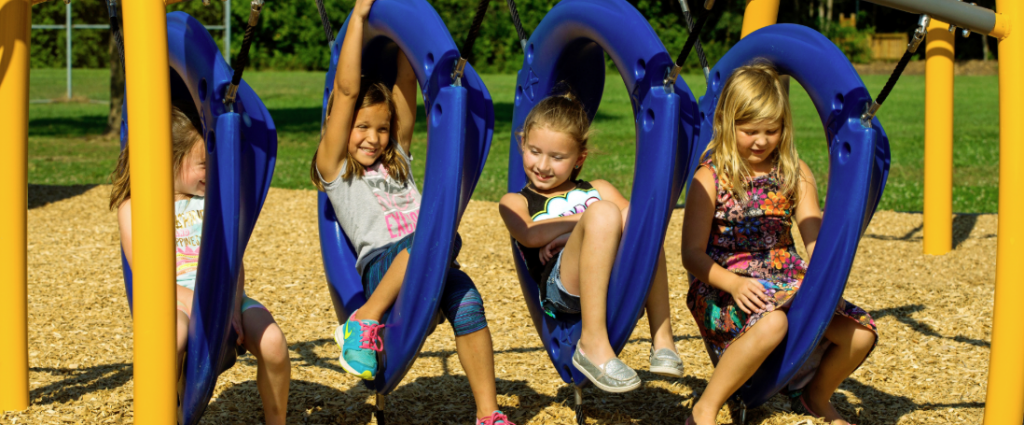 Engineered wood fiber creates a natural-looking playground surface with impact attenuation—and can be topped off as needed to maintain the proper depth for fall protection.
Engineered Wood Fiber: A Natural-Looking, Budget-Friendly Option
Engineered Wood Fiber is a long-standing playground surfacing choice that provides a natural appearance and good shock absorption. It is often a practical solution when a project needs compliant fall protection while working within a specific budget. GameTime notes that engineered wood fiber can provide approved attenuation for falls up to 12 feet and forms a “knitted” layer designed to support mobility devices such as wheelchairs, crutches and walkers.
One thing every playground owner should remember: loose-fill surfacing requires ongoing attention. Over time, material can move, compact or become displaced. DWA Recreation helps schools, churches, parks and recreation departments with engineered wood fiber top-offs and refills to help maintain the appropriate surfacing depth for the equipment's fall height.
Sometimes playground safety doesn't require an entirely new playground—it simply requires bringing the existing surface back to where it needs to be.
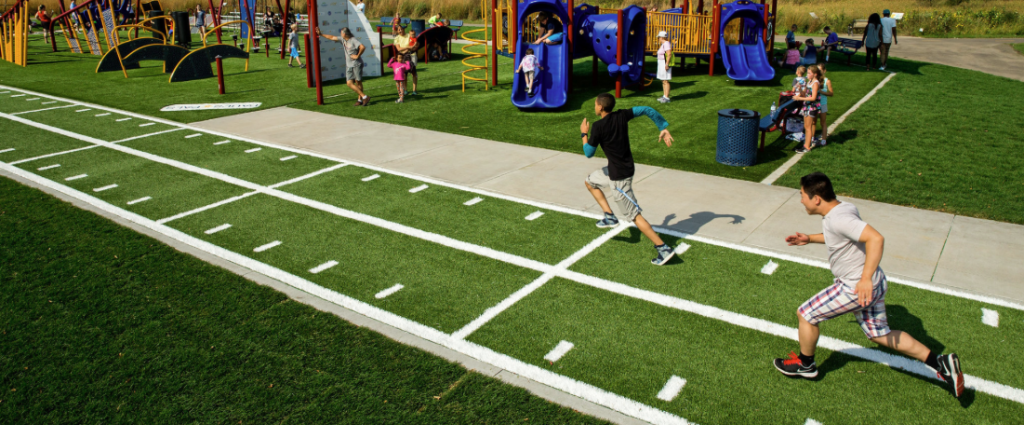 Synthetic turf creates a welcoming, low-maintenance outdoor surface that can extend beyond the playground to outdoor classrooms, seating areas and community gathering spaces.
Synthetic Turf: A Natural Look With More Possibilities
Synthetic Turf is another surfacing option that can bring a softer, natural appearance to an outdoor recreation space. GameTime's synthetic turf combines a grass-like appearance with a compliant attenuation layer. It is low maintenance, does not require mowing and works well in nature-themed playgrounds as well as athletic, fitness and recreational spaces.
And this is where things get interesting. Synthetic turf doesn't have to be limited to a traditional play area. For example, DWA Recreation is currently installing synthetic turf at a local school to create an outdoor learning and seating area. Instead of a traditional hardscape courtyard, the school will have a comfortable, inviting space where students can gather, learn and spend time outdoors.
The same concept can work around shaded seating, outdoor classrooms, community gathering areas and other spaces where people need a durable surface that feels more inviting than concrete or asphalt.
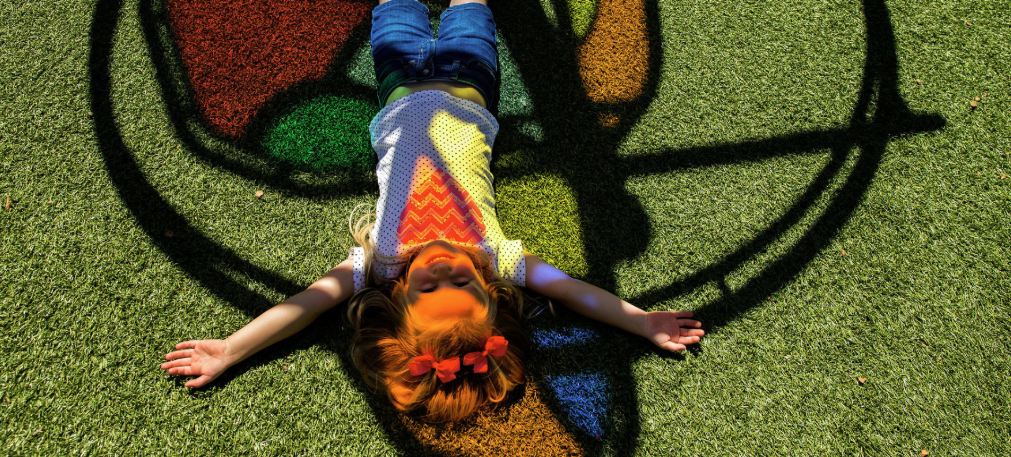 Girl laying on synthetic turf
Where Else Can Safety Surfacing Be Used?
One of the biggest opportunities with modern recreation surfacing is thinking beyond the traditional playground footprint. Consider an apartment community with a shaded pavilion, benches and a small gathering area. Instead of surrounding those amenities with plain concrete, a durable recreational surface can help create a more cohesive outdoor destination.
Or consider a school courtyard. A combination of synthetic turf, shade and seating can transform an underused area into an outdoor classroom.
Parks can use surfacing to connect play areas with seating and gathering spaces. Churches can create welcoming outdoor areas for children and families. Community developers can incorporate durable surfaces into shared amenities designed for residents to gather, play and spend time outside.
The best surfacing choice starts with how the space will actually be used.
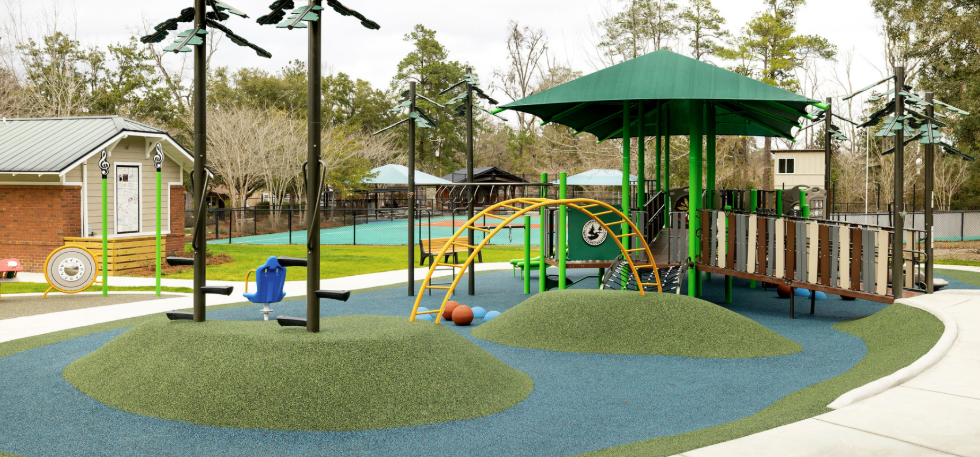 Poured in Place Rubber at a local park
Choosing the Right Playground and Recreation Surfacing
There isn't one perfect surface for every project. The right choice depends on several factors, including:
- Required fall height and safety requirements
- How heavily the area will be used
- Accessibility needs
- Maintenance expectations
- Budget
- Drainage and existing site conditions
- Desired appearance
- Whether the surface needs to support play, gathering, walking or multiple activities
That's where working with an experienced recreation professional can help. At DWA Recreation, we can help you look at the entire space, not just the playground equipment, and determine what type of surfacing makes sense for your project. Whether you need a new playground surface, an engineered wood fiber top-off, a durable surface around outdoor amenities or an entirely different approach for an outdoor learning space, we're here to help.
Safety Surfacing Can Do More Than You Think
Playground surfacing has an important job: helping create safer play environments for children. But today's surfacing options can also help transform the spaces around those playgrounds—and even create entirely new outdoor destinations. From poured-in-place rubber and recycled loose-fill rubber to engineered wood fiber, synthetic turf and bonded rubber, there are solutions for playgrounds, schools, parks, churches, apartment communities and other high-use outdoor spaces.
The next time you're planning an outdoor recreation project, don't just ask, “What surface should go under the playground?” Ask: “What could this entire outdoor space become?” DWA Recreation can help you find the answer.
