
Benches and Shade and Receptacles, Oh My!
The Site Furnishings That Turn a Recreation Space Into a Destination
When people picture a great recreation space, they usually picture the big things first: the playground, the splash pad, the sports field or the fitness equipment. But what makes a recreation space truly successful often has less to do with the biggest piece of equipment and more to do with the details surrounding it. Benches. Tables. Shade. Trash receptacles.
They may not be the most exciting items in a park plan, but they play a huge role in how people experience and use the space. The right site furnishings can make a recreation area more comfortable, more welcoming, more accessible and, ultimately, a place where people want to stay.
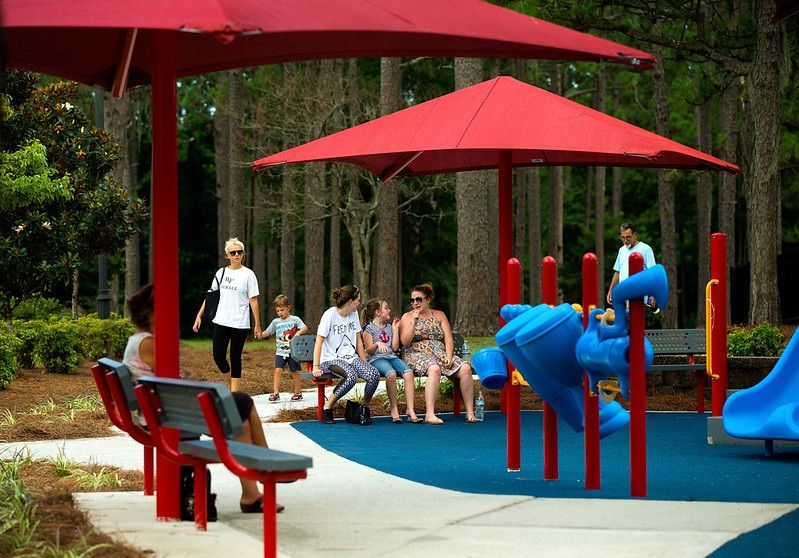 Playground featuring seating, shade, and other site furnishings
Seating: More Than Just a Place to Sit
A playground might be designed for children, but the people using the park are rarely just children. Parents, grandparents, caregivers, siblings and friends all need places to sit, gather and enjoy the space. Providing comfortable seating allows people of different ages and abilities to spend time together rather than separating into different areas of the park.
And that can mean longer visits.
A parent may be happy to stay at the playground for another 30 minutes if there is a comfortable place to sit in the shade. A grandparent may be able to enjoy watching the grandchildren play because there is a bench with a supportive back and an appropriate height for easier sitting and balancing while standing. Someone with limited mobility may need a place to rest between activities.
Small design decisions can make a big difference in who gets to enjoy the park and for how long.
Tables Should Welcome Everyone
Tables are another often-overlooked part of recreation planning. Accessible picnic tables and ADA-compliant tables aren't just useful for people who use wheelchairs. They can also make a space easier to use for families with strollers, individuals using walkers and older adults who may have difficulty navigating traditional picnic seating. An accessible table can also create a natural gathering point where people with different mobility needs can eat, talk and participate together.
That's the goal of inclusive recreation: not simply providing access to an individual piece of equipment, but creating an environment where everyone can participate in the experience.
Shade: Comfort Changes Everything
Let's be honest: a beautiful park isn't nearly as enjoyable when the seating, picnic areas and play spaces are sitting in the hot sun all afternoon. Shade structures can help reduce heat exposure and make outdoor spaces significantly more comfortable, particularly during the warmer months. They can also provide relief for children, parents, grandparents and caregivers who may otherwise cut a visit short because of the heat.
Shade also contributes to the visual appeal of a recreation space. A well-placed shelter or shade structure can define a gathering area, create a welcoming focal point and make an otherwise open space feel more intentional.
And there's another important consideration: reducing direct sun exposure. Providing shaded areas gives visitors opportunities to take a break from the sun and limit the amount of time they spend in direct UV exposure. In other words, shade isn't just an amenity. It's part of designing a recreation space people can comfortably enjoy for years to come.
Trash Receptacles: Not Glamorous, But Very Important
Nobody puts a trash receptacle on their park wish list because it's exciting. But everyone notices when one is missing.
Conveniently placed trash and recycling receptacles make it easier for visitors to keep the park clean and can contribute significantly to the overall appearance of the space. A clean, well-maintained park feels more welcoming and encourages visitors to treat the space with the same care.
Yes, trash receptacles require periodic cleaning and maintenance. That's simply part of owning and operating a public recreation space. But that small maintenance task supports something much bigger: a park that continues to look cared for and inviting long after the ribbon-cutting ceremony is over.
It's All About the Experience
The best recreation spaces aren't simply collections of equipment. They're thoughtfully planned environments that consider how people actually use a park.
- Where will grandparents sit?
- Where can a parent take a break?
- Can a family using a stroller comfortably gather around a table?
- Is there shade nearby?
- Are trash receptacles conveniently located?
- Can people with different mobility levels participate together?
- Are there comfortable places to gather before, during and after play?
These questions may not be as flashy as choosing the color of a playground, but they are essential to creating a recreation space that works for the entire community.
Because the perfect recreation space isn't just a place to play. It's a place to stay.
And sometimes, the difference between a good park and a great one really is as simple as benches, tables, shade and receptacles... Oh my!
